


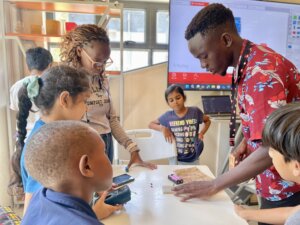
 This workshop ran with the theme: Technology in Climate Action. This was both educational and very exciting.
We had a simple introduction to environmental conservation, then jumped into coding.
The kids built a game where your tree only grows if you keep perfectly still.
After that we shifted gears into hands-on science, exploring how CO₂ affects temperature rise in the environment. The kids ran a reaction using calcium carbonate and HCl, watching it produce water and carbon dioxide, and learning how those gases play out in the real world.
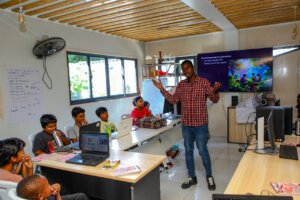
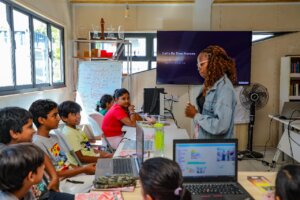
We went on a deep dive into electronic components: LEDs, sensors, and microcontrollers. This showed the kids how each piece plays its part in transforming an input into a meaningful output.
We then moved into full hands-on innovation where the kids assembled smart garden prototypes using Arduino boards, breadboards, soil-moisture/water meters, and wiring.


